



The Pakistan High Commission in London is reportedly attempting to broker an out-of-court settlement between cricketer Haider Ali and a Pakistani-origin British woman who has accused him of rape. The 24-year-old, whose career never fulfilled its early promise, was arrested in Canterbury last week during a Pakistan Shaheens match following allegations of rape on 23 July in Manchester.
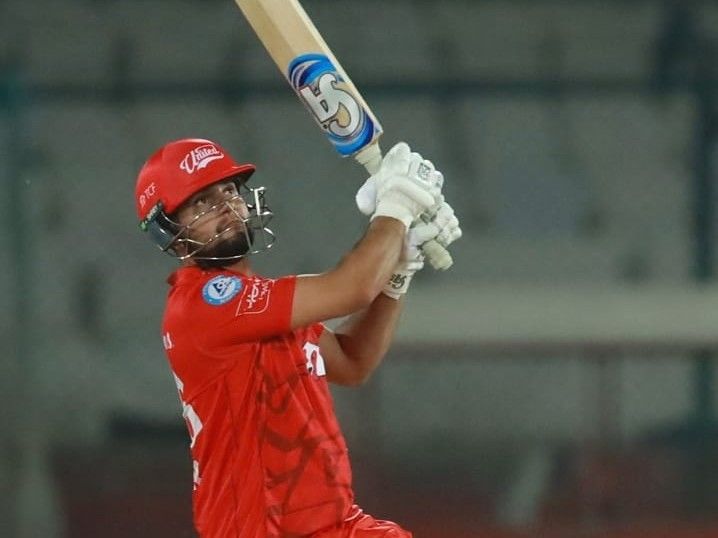
According to PCB sources, the High Commission has engaged lawyer Moeen Khan to defend Haider, allegedly on the instructions of Pakistan Cricket Board (PCB) chairman and Interior Minister Mohsin Naqvi. Greater Manchester Police granted Haider two weeks’ bail and returned his passport after finding no concrete evidence, although the case remains under investigation.
Haider knew the girl for a long time and they were meeting regularly. On her invitation he went to meet her, breaking team rules. Head coach Imran Farhat and captain Saud Shakeel are also under questioning by the PCB for failing to monitor his movements.
The complainant’s family, however, has rejected any notion of settlement. “The family of the girl is not ready for a settlement with a rapist and want the law to take its course,” a source close to the family confirmed.
Timeline of events
Investigations reveal the woman booked a Manchester hotel where she and Haider spent time on 23 July before travelling to Kent and spending another day together. Days later, she lodged a formal complaint, leading to Haider’s arrest.
Under UK law, the victim must present all evidence and undergo medical examinations. Police have since returned Haider’s mobile phone after failing to retrieve incriminating material.
A wider cricketing malaise
The scandal has reignited debate about player discipline in Pakistan cricket, with comparisons being drawn to India’s robust player development system.
Look at how India keeps their players on track while ours go wayward. We must learn from India, where the BCCI grooms players and they shine on the international stage. Without strict measures, cases like Haider’s will keep tarnishing our cricket.
Haider’s career trajectory starkly contrasts with that of his Indian contemporaries. In the 2020 ICC Junior World Cup in Potchefstroom, Haider’s half-century was overshadowed by Yashasvi Jaiswal’s match-winning hundred, leading India to a ten-wicket win over Pakistan. Today, Jaiswal is ranked among the world’s top five Test batters, while Haider’s career is stalled.
Similarly, Shubman Gill and Pakistan’s Rohail Nazir clashed in the 2018 Under-19 World Cup. Gill scored a century in India’s massive win and has since become one of the world’s leading batsmen, amassing 754 runs against England in a recent Test series. Rohail, by contrast, has played only three T20Is before being dropped.
It is the PCB’s duty to introduce educational courses at the National Cricket Academy, teaching young players how to avoid pitfalls like doping, fixing and misconduct. They must understand they are ambassadors of the country — they should bring glory, not shame.