

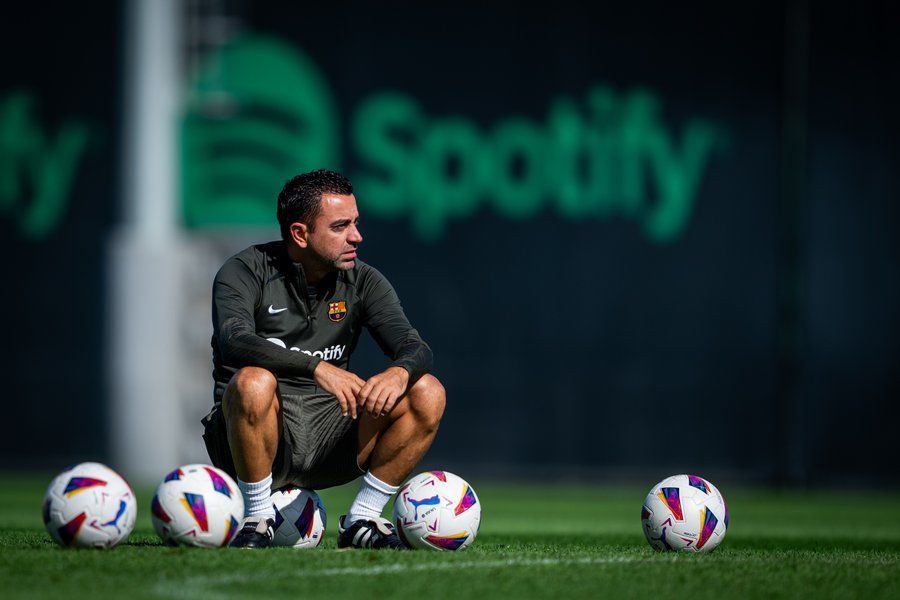
When news broke that Xavi Hernandez, one of the most decorated midfielders in football history, had applied to coach the Indian national team, the reaction at the All India Football Federation (AIFF) headquarters was a mix of disbelief and awe.
“Yes, he applied… it looked like he was genuinely interested,” a senior AIFF official told one of the leading agencies PTI. This wasn’t a stunt or a misfired email. This was the Xavi, World Cup winner, Barcelona legend, and former coach of Al Sadd and FC Barcelona, signalling interest in taking charge of a team ranked outside FIFA’s top 100.
But his application, as electrifying as it was, tells us more about India than Xavi.
The Pattern Is Familiar — But Louder Now
Back in 2019, when AIFF launched a global search, 40 names emerged. The shortlist featured respected figures — Lee Min-sung, Albert Roca, Igor Stimac and Håkan Ericson. Six years on, the scale is dramatically different: 170 applicants, including Liverpool icon Harry Kewell, Robbie Fowler, Steve Kean, Stephen Constantine, and Khalid Jamil.
Now, the final shortlist includes just three: Constantine, Jamil, and Štefan Tarkovič. A far cry from the blockbuster names that applied.
Why India? Why Now?
India’s appeal isn’t built on FIFA rankings or past footballing glory. It’s powered by geopolitical heft, economic boom, and the sheer magnetism of a billion-strong market. Global coaches are not naïve — they know India remains a footballing paradox. But that’s also its attraction.
A nation excelling in space tech, IT, pharma, and global business still struggles to produce a regular pipeline of 20 world-class footballers. For thinkers like Xavi, this is not a deterrent but a challenge worth solving.
“India represents the last great footballing frontier,” a European technical consultant once remarked. “It’s the Everest of development projects.”
The Harsh Economics of Ambition
Despite the fairytale buzz, the reality check was swift. "The cost of bringing someone like Xavi on board is simply out of reach for the federation," admitted the AIFF. It wasn’t about belief — it was about budget.
This fiscal prudence mirrors the decision-making of 2019, when Igor Stimac was hired under a similar trade-off: accept a high-quality coach within financial limitations or dream beyond reach. Xavi’s interest reopens this debate — how much is India willing to invest in real transformation?
System Failure, Not Just Coach Failure
Let’s be clear: India’s underperformance isn’t about the coaches it hires. It’s about the structure they inherit. Since 2019, we’ve cycled through philosophies, strategies, and managers—but the same old problems remain. A fractured domestic calendar. Club vs country tussles. Weak grassroots infrastructure. Inconsistent youth pathways. Lack of coaching continuity.
Even someone like Stimac — World Cup semi-finalist with Croatia—couldn't out-coach a broken system.
Chhetri’s Longevity, India’s Inertia
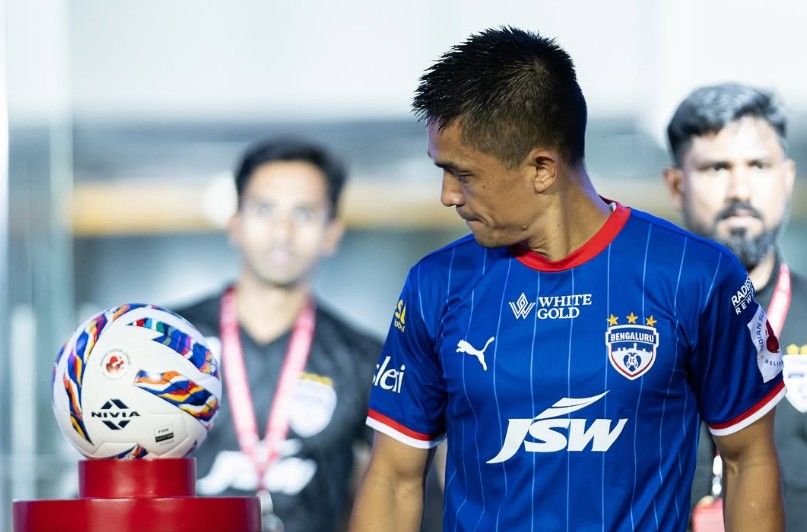
Sunil Chhetri’s legendary career is worth celebrating. But the fact that India still leaned on him in his late 30s underscores a deeper rot. How has a nation of 1.4 billion not found the next Chhetri? Or even the next three?
No coach, not even Xavi, can solve that overnight. Because the problem isn’t tactical—it’s structural.
What Xavi’s Application Actually Means
Let’s move beyond the headlines. Xavi’s application is not just a celebrity footnote—it’s a symbol of what India could be. His interest validates India’s untapped potential and positions it as a future footballing powerhouse. It signals that the world is watching—and willing to engage.
But this also comes with responsibility. The AIFF cannot rely on global admiration alone. It must back this moment with a systemic overhaul:
• Invest in youth and grassroots coaching
• Professionalise league structures
• End the club vs country tug-of-war
• Create long-term development blueprints
• Build institutional memory that doesn’t reset every 3 years
The Verdict: It’s Not About Who Gets the Job
Ultimately, whether Constantine, Jamil, or Tarkovič gets the nod is secondary. The real question is: what will they be given to work with? Will they inherit the same unstable scaffolding, or a reformed ecosystem that values continuity, player development, and coach support?
Xavi’s name lit up inboxes. But it’s India’s football system that needs to light up fields.
Until that changes, world-class coaches will remain attracted to India—but unable to truly succeed in it.
Closing Thought
The appointment of India’s next coach will make headlines. But the headlines that matter more are the ones that should appear ten years from now—not about who applied, but about what India finally achieved. Whether that future is real or still fantasy depends not on Xavi or his peers—but on how seriously India takes its football revolution.