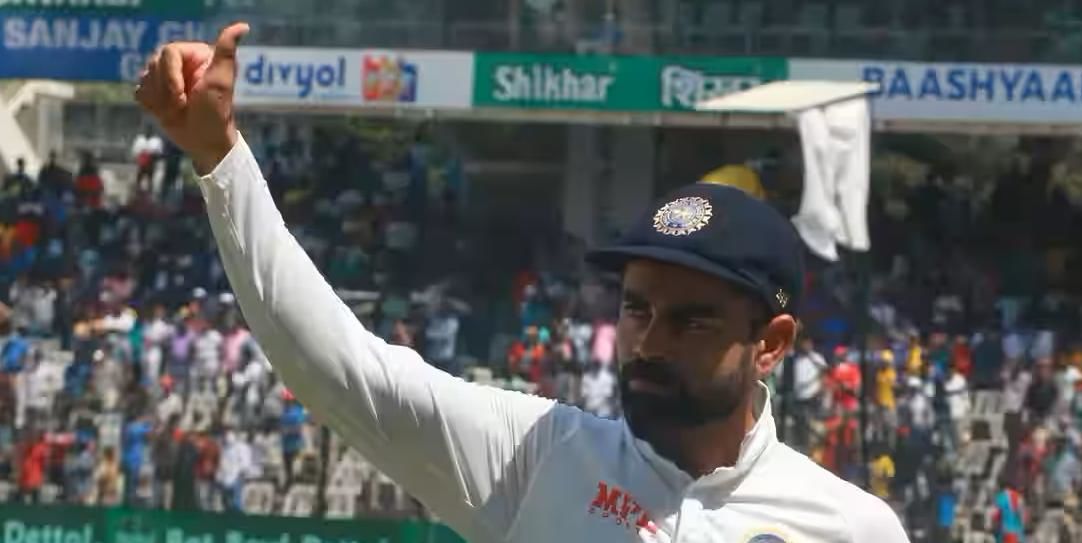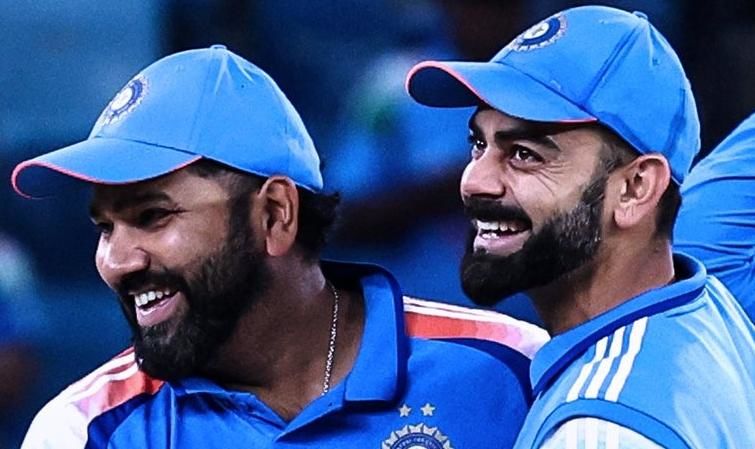



The dust is slowly settling down on Virat Kohli’s retirement from Test arena – leaving in it’s wake a couple of key questions. If the Indian cricket fan is bothered about who will be the right choice to walk in as No.4 in the Test series against England from next month, India Inc is wondering whether Kohli’s sky high brand value will take a beating in view of his international appearances being limited to only the ODI format from now on.
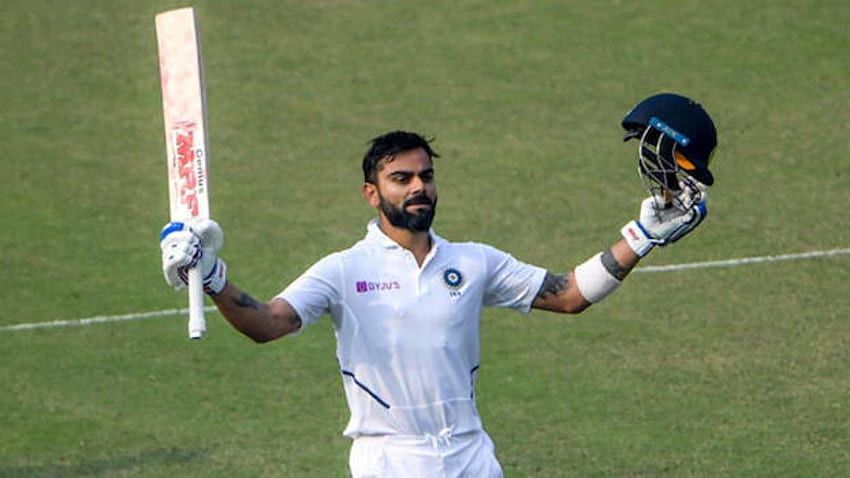
If industry experts are to be believed, the Test retirement is not going to cast any shadow on the fortunes of arguably the most marketable brand in the country – at par with the Bollywood bigwigs like Shah Rukh Khan and Ranveer Singh. A brand valuation report from Kroll back in 2023 says that the former Indian captain had reclaimed the top spot as the most valuable brand at $ 227.9 million – despite having quit all forms of captaincy the previous year.
Is it more an emotional response about Kohli’s brand value or based on clinical market rationale? Mohit Hira, an industry veteran and co-founder of Myriad Communications & Venture Partner, YourNest Capital Advisors, feels his exit from Test cricket – contrary to popular brief – is likely to push up his valuation further.
Virat Kohli has endorsed over 40 brands which must be some kind of a record. While his face was once so visible that it created a vampire effect in our parlance (in which consumers often recall the ambassador but not the brand), his exit from Test cricket is likely to push up his valuation: like a painter or sculptor’s works of art, controlling supply tends to drive up price.
Virat the cricketer may be absent (for a substantial part of the season), but Virat the brand will still be around: he is an astute businessman and is hardly likely to disappear into the sunset. I can only see more spin-offs: brand franchises, merchandise, picky selection of relevant endorsements… all of which will make him even more coveted and more valued. He’s also very careful of his on-screen persona, so you’re unlikely to see him pretending to be a farmer peddling fertilisers. Like his game, his endorsements are also very real.
Late last year, Kohli made heads turn in the industry when he parted ways with Cornerstone, the celebrity and event management company headed by his longtime friend Bunty Sajdeh – the later having signed on young turks like Kohli, Rohit Sharma and Suresh Raina years back. The reasons for the break-up are not very well known, but an older and wiser Kohli went on to join hands with a new company Sporting Beyond.
The team at Sporting Beyond shares my goals and my values of transparency, integrity and a love for the sport, in all it’s forms. This opens a new chapter for me as I look forward to my partnership with my new team, who will be working with me on all of my business interests.
Now on, Kohli’s face will not be a part of the World Test Championship (WTC) build-up or the next T20 World Cup, to be co hosted by India and Sri Lanka, but there are apparently no reasons to worry. Echoing Hira’s sentiments was Tuhin Mishra, co founder and Managing Director of Baseline Ventures, which manages a clutch of top Indian athletes across disciplines including cricket.
See, in case of brands like a (Sachin) Tendulkar, (Mahendra Singh Dhoni) or Kohli, it does not matter whether they are retired or not. Kohli stays very much relevant as he will continue to play the 50-overs game and the IPL for at least another couple of years. I, for one, don’t see the demand for him dipping though the valuation may differ in due course.
Mishra said that the way Kohli has taken his brand forward as a global athlete had been simply awe inspiring. ‘’Despite being a cricketer, an essentially commonwealth sport, he has the third highest Instagram following after Cristiano Ronaldo and Leo Messi. A great deal of his followers must be drawn from his fans in the sub-continent and that explains his reach,’’ the sports management entrepreneur said. The latest figures present him as the most followed Asian athlete at 270 million while Ronaldo (638 m) and Messi (504m) ahead of him.
Leaving aside his earnings from a BCCI A+ contract of Rs 7 crore annually (which will apparently be not downgraded despite him quitting two formats) and IPL – where his contract with Royal Challengers Bangalore now stands at Rs 21 cr per season, it’s his endorsement portfolio which rakes in the mega bucks.
It’s both extensive and varied – ranging from sportswear giants like Puma to consumer goods companies such as MRF Tyres and Blue Star. Kohli became the first Indian cricketer to sign a Rs 100-crore deal with Puma while his long-standing partnership with MRF Tyres, renewed in 2017 for Rs 100 crore over eight years, further exemplifies the trust brands place in his influence. His other notable associations are Audi, Myntra, Tissot, Boost, Head & Shoulders, Pepsi, Nestle, Colgate, Reebok.
Beyond endorsements, Kohli has also diversified his interests as he is the co-owner of the Indian Super League football team FC Goa, invested in the fitness chain Chisel and launched the fashion brand WROGN. In addition, Kohli’s investments in start-ups like Digit Insurance and the plant-based meat company Blue Tribe have also made news in recent times.
Kohli’s investments in start-ups only reaffirm his sharp business acumen: while he’s idolised by people across socio-economic strata, Kohli probably attracts more fans who are younger and upwardly mobile. Today’s young Indians tend to be far more careful and aware of their food habits, health, fitness, style. And that’s exactly where Virat Kohli has invested: in every start-up where he has a stake, it’s evident that there’s either a personal belief or a commitment to a cohort. Chances are he’s investing not just for significant returns but also because these brands are aligned with his (and his wife Anushka’s) own convictions.
As the cliché goes, Kohli stays a winner on and off the field!