



Delhi’s depleting Air Quality Index (AQI) is no longer just an environmental concern, it has escalated into a full-fledged sporting emergency. While the city’s residents grapple with burning eyes, persistent cough and throat irritation, athletes face a far deeper threat, one that endangers not only their performance but their long-term careers.
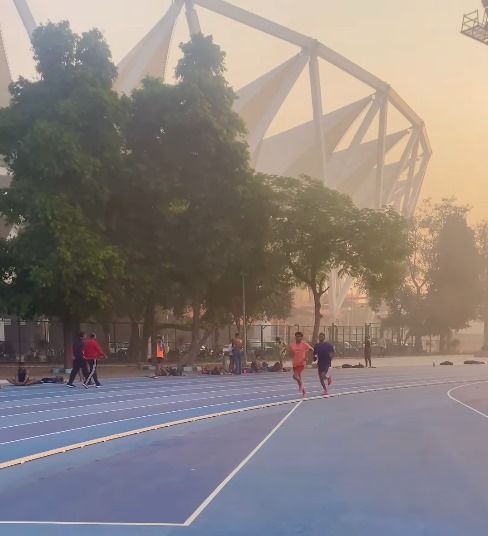
With AQI levels swinging between 350 and 450 for days, Delhi has slipped into a zone where even a casual walk outdoors is unsafe. For athletes who rely on oxygen for peak performance, the very air they breathe is becoming their biggest opponent.
Toxic Air, Toxic Impact
Health experts warn that prolonged exposure to such pollution levels can lead to severe and lasting consequences, especially for endurance athletes. Microscopic pollutants burrow deep into the lungs, inflaming airways and reducing the body’s ability to absorb oxygen. The heart is forced to work harder, triggering faster fatigue and compounding health risks.
For runners, cyclists, and footballers who spend hours training outside, the danger is silent but steady, reduced lung capacity, recurring respiratory illnesses, and long-term cardiac strain.
A Young Runner with No Escape Route
Ironically, it was a Mumbai-based NGO that raised the alarm for its beneficiary, Sayed Mohammed Abbas, a middle- and long-distance runner who trains daily at Jawaharlal Nehru Stadium. Abbas, 19, competes in events such as the 3000m steeplechase and 5000m and is among nearly 500 athletes dependent on the stadium’s facilities. What should be a centre of excellence is slowly turning into a health hazard.
Abbas says he has no choice but to train in Delhi’s polluted air.
With the Athletic Federation of India’s calendar out, we have to prepare for the upcoming races. For us there is no substitute… Middle- and long-distance runners cannot train indoors. We cannot afford to leave Delhi. We are stuck,
Coaches Fear What They Can’t Control
Delhi chief athletic coach Dinesh Rawat has watched the crisis unfold from the sideline, often helplessly.
The AQI levels are too high. But what can we do? The pollution is extreme, especially in the mornings with thick smog. I’ve told athletes to train in the afternoons when it’s slightly lower.
Rawat also underlines the harsh truth few talk about: most athletes simply cannot afford to move.
These athletes come from very humble backgrounds. Relocating is too expensive. And they won’t get facilities elsewhere like the ones they have in Delhi..
For many, the dream of competing for India now runs through a gauntlet of polluted air.
Winter Brings More Trouble
As winter deepens, the smog thickens and the risks multiply. Masks and inhalers have become as essential as spikes and stopwatches. Sessions are shorter, illnesses more frequent. Yet competitions do not pause and trials do not wait for cleaner days.
A City Suffocating Ambition
Delhi’s air has become an invisible opponent — relentless, silent, and unforgiving. It is no longer just clouding the sky; it is slowly choking ambition. Until the air clears, the city’s athletes will continue battling not just rivals on the track, but the very atmosphere that is supposed to fuel them.
Germany Clinch Record-Extending 8th Junior World Cup; India Produce Stunning Comeback for Bronze